

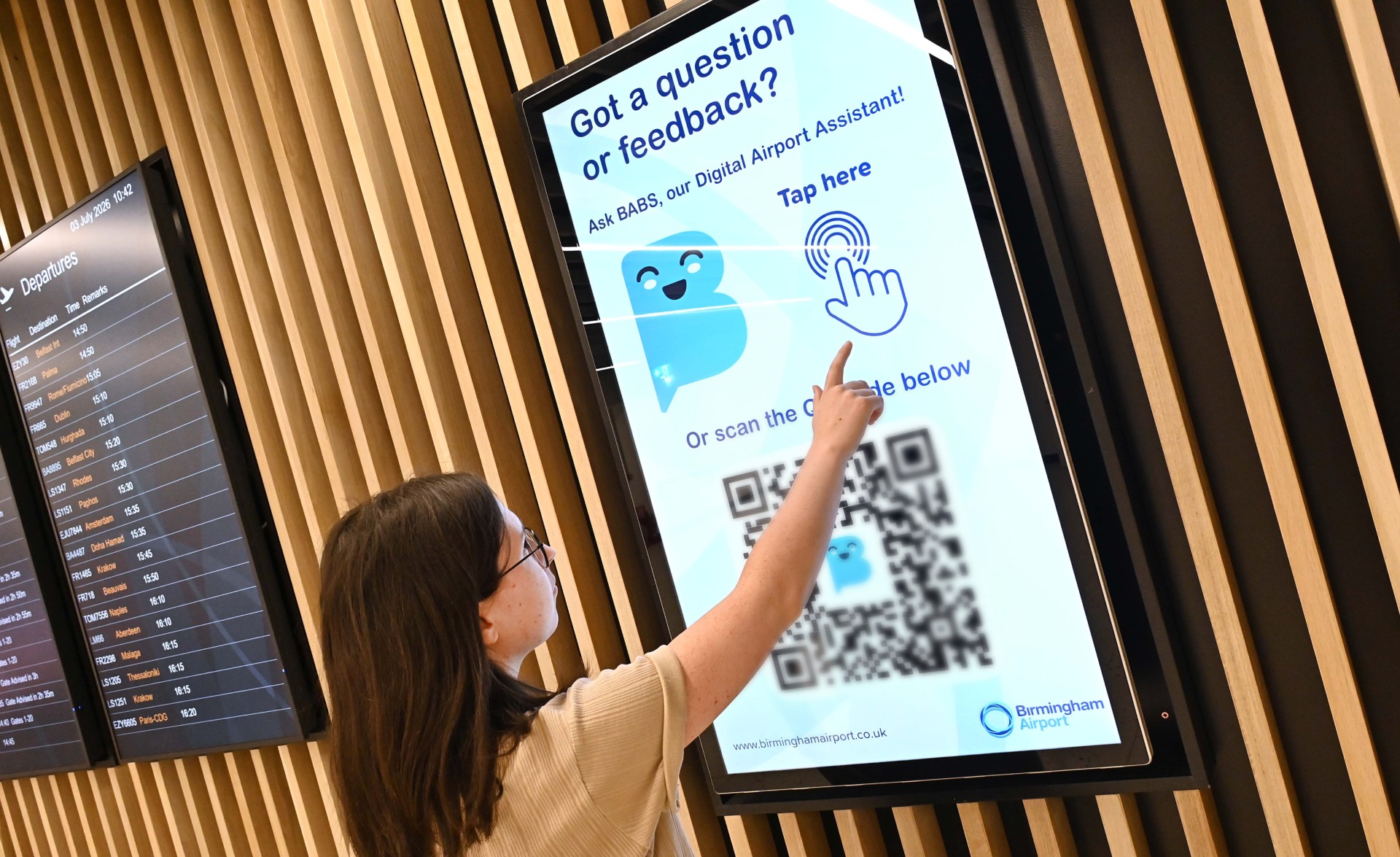

Airport disruption creates an immediate and often overwhelming information problem. When flights are delayed or cancelled, weather affects operations or an unexpected incident causes congestion, thousands of passengers can suddenly need answers. Now!
- What happens to my flight?
- Can I still get to the airport?
- What happens to my booking?
- Where should I go?
- Can I extend my parking?
- Where can I stay overnight?
The volume of questions can increase far faster than an airport can increase its customer service capacity. This impact isn’t only related to disruptions, these pressures can also be experienced during peak vacation periods and during the lead up to national holidays.
Why disruption puts pressure on airports
Airport customer service teams operate with finite staffing levels. Disruption doesn't. A major event can generate a sudden surge in passenger enquiries across phone lines, information desks, websites and social media.
This creates a difficult situation. Staff are dealing with more questions precisely when passengers are most anxious and when frontline teams need to focus on managing the operational consequences of the disruption. The latest AI tools can provide an additional layer of capacity.
AI provides elastic customer service capacity
An AI Digital Assistant can handle thousands of passenger questions simultaneously. Unlike an airport call centre, it doesn't require passengers to wait for the next available agent. Unlike an airport information desk, it doesn't become physically congested. This makes AI particularly valuable for airport disruption management.
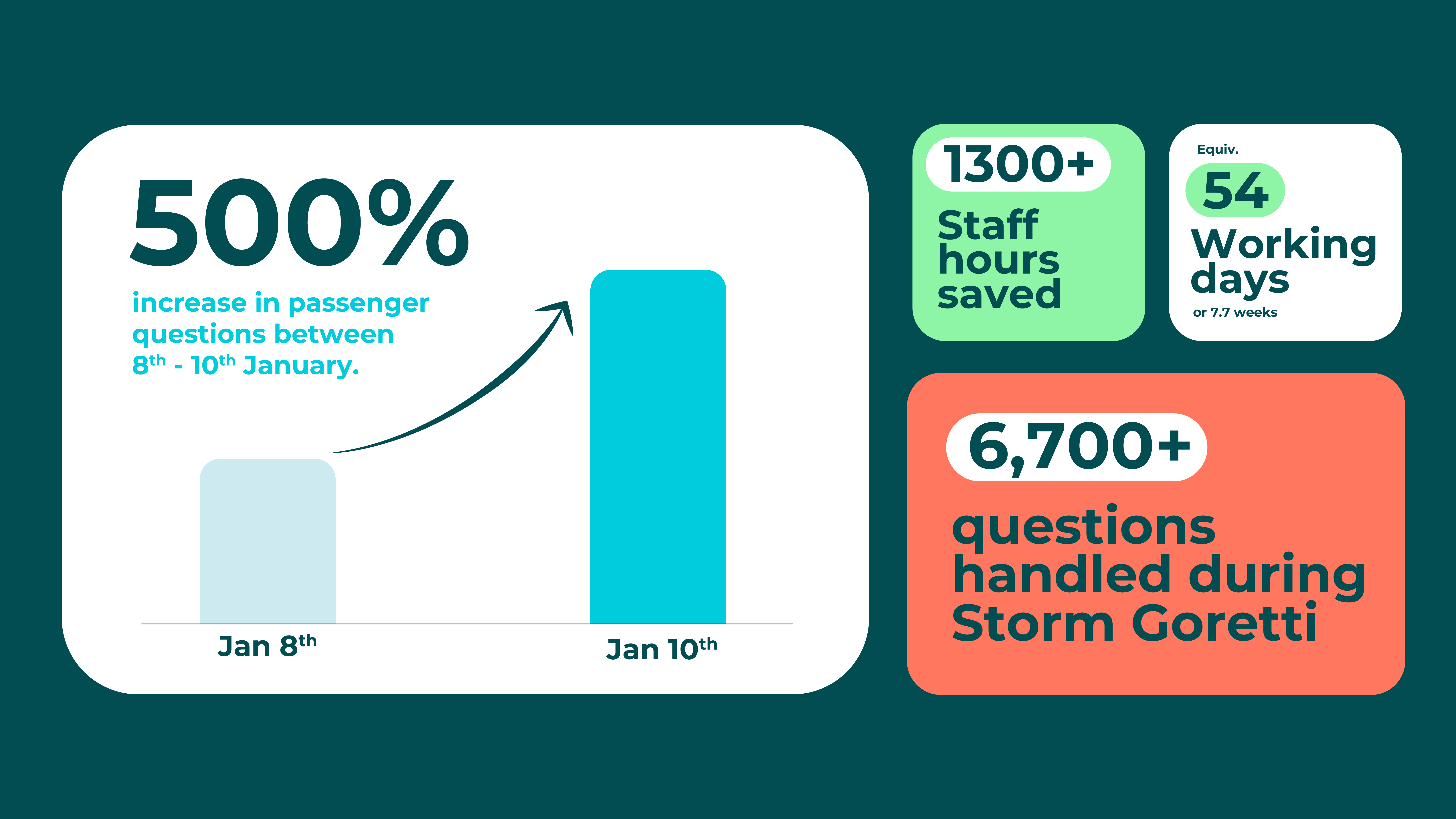
During severe weather disruption at Birmingham Airport, passenger enquiries increased by 500%. Hello Airport handled more than 6,700 questions over three days, saving approximately 782 staff hours, equivalent to 97 working days of manual customer service activity.
This demonstrates the value of what can be described as elastic capacity: the ability to absorb sudden increases in demand without requiring an equivalent increase in staff.
Providing immediate disruption information
During disruption, passenger questions are often urgent but informational. Passengers need to know what has changed and what they should do next. An AI airport disruption assistant can provide information about:
- Flight delays and cancellations
- Rebooking procedures
- Airport opening information
- Parking extensions
- Transport arrangements
- Accommodation guidance
- Alternative travel options
- Airport facilities
- Assistance arrangements
The aim isn't to make decisions on behalf of passengers. It is to make accurate information easier to access.
Reducing congestion at the airport
Digital support also has a physical impact. When passengers cannot find information online, they often turn to members of staff to help them. This “failure demand” drives up costs and frustration that creates queues at information desks, congestion around customer service points and increased pressure on airport employees.
By providing immediate answers digitally, AI can reduce the number of passengers physically seeking assistance. This can help airports manage passenger movement during periods when congestion is already a problem.
.jpg)
Supporting passengers who need additional assistance
Disruption can be particularly difficult for passengers who require additional support. Changes to gates, schedules or processes can create additional uncertainty for passengers with reduced mobility, neurodiverse passengers or people who need more time to understand what is happening.
The latest AI digital assistants in the form of a purpose built Digital Team Member like Hello Airport provides an additional, discreet channel through which passengers can ask questions and understand their options. Because the service can be available 24/7 and in multiple languages, it supports passengers even when traditional customer service channels are under pressure.
Turning airport disruption into operational insight
AI can also help airports understand what is happening from the passenger perspective. The questions being asked during disruption provide a real-time picture of passenger concerns. For example, if large numbers of passengers suddenly ask about parking, transport, accommodation or a particular terminal, airport teams can identify those pressure points quickly.
The Hello Airport approach combines passenger interaction with structured insight into sentiment, confusion points and emerging operational pressures.
Preparing for the next disruption
Whilst airport disruption is hard to predict, the demand for information can. To best prepare for potential disruptions, airports need a customer service infrastructure that can scale when demand suddenly changes.
AI Digital Assistants provide an additional layer of capacity that is available before, during and after disruption. The result is not simply fewer enquiries for staff. It is a more resilient passenger information service that can continue supporting passengers when conventional customer service channels are under the greatest pressure.


-p-800.png)