


Where is my gate? How long will security take? Where can I find the car park? Is my flight delayed? How do I get assistance? These are just some of the many questions airports handle thousands of times, every single day.
Individually, these questions are straightforward to answer. Collectively, they create significant workloads for already busy airport customer service teams.
AI is increasingly providing airports with a way to automate routine passenger enquiries while giving people faster self-service access to the information they need. But the opportunity is about more than simply deploying an airport chatbot. The most effective solutions combine conversational AI with real-time information, location awareness and a clear understanding of the passenger journey to deliver context-aware support.
Automating routine airport enquiries
A large proportion of airport customer service demand is informational rather than requiring specialist human intervention.
Passengers commonly need information about:
- Flight arrivals and departures
- Gate locations
- Security and check-in
- Parking
- Public transport
- Airport facilities
- Shops and restaurants
- Accessibility and assisted travel
- Baggage
- Airport procedures
An AI assistant can handle many of these interactions automatically, allowing customer service teams to focus their time on situations where human judgement and intervention are genuinely needed.
At Cincinnati/Northern Kentucky International Airport, Hello Airport has helped divert more than 25,000 questions from customer experience teams, saving more than 375 staff days annually. It has also supported more than 21,000 additional passengers each year.
.jpg)
From airport chatbot to Digital Team Member
Traditional airport chatbots tend to operate as another digital channel for answering frequently asked questions, but they also come with a lot of limitations. AI Digital Assistants can go much further, while Digital Team Members can take this even further by supporting a broader range of passenger and operational needs.
Hello Airport is designed as a Digital Team Member: a digital layer that supports the airport's existing teams and is available wherever passengers need it.
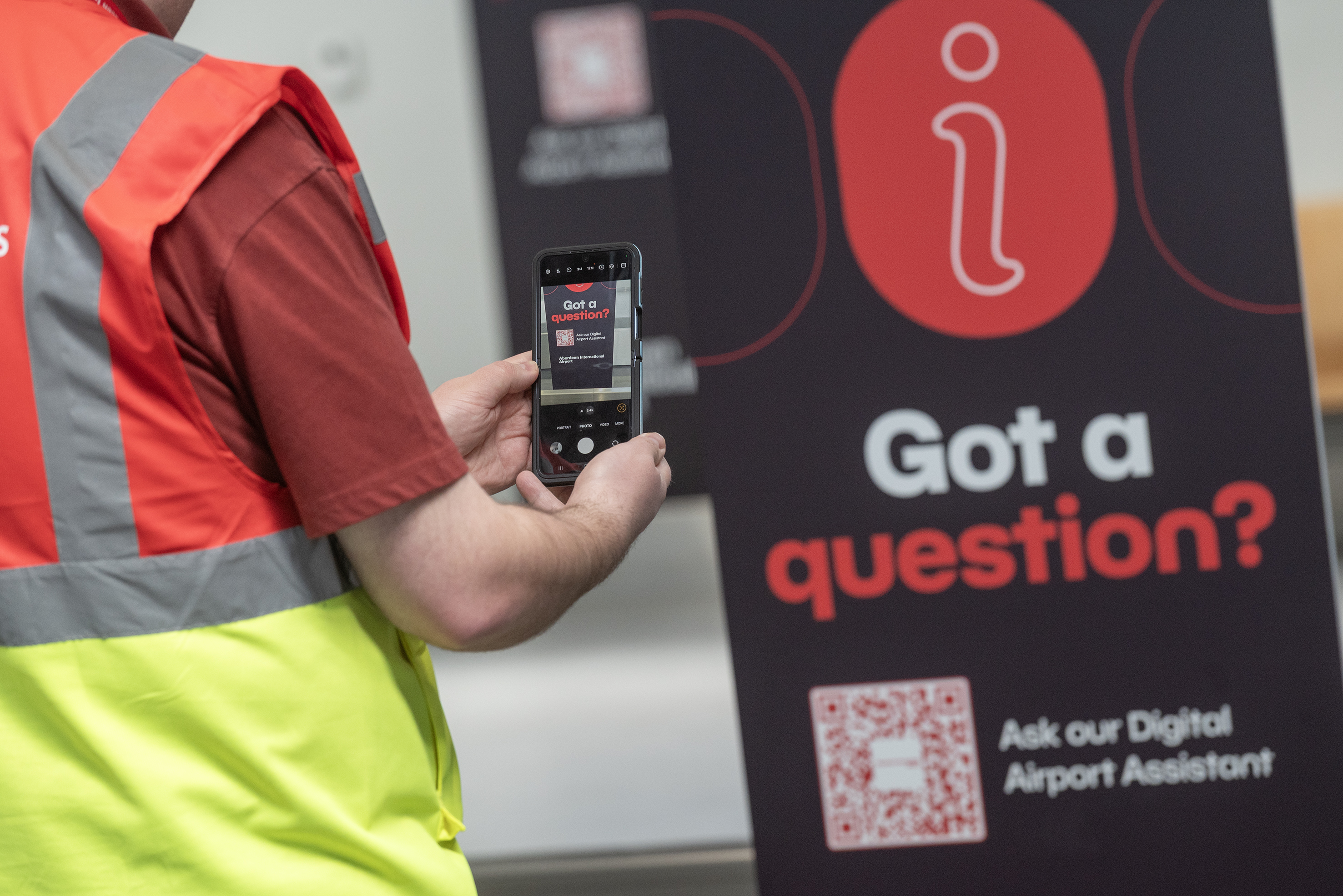
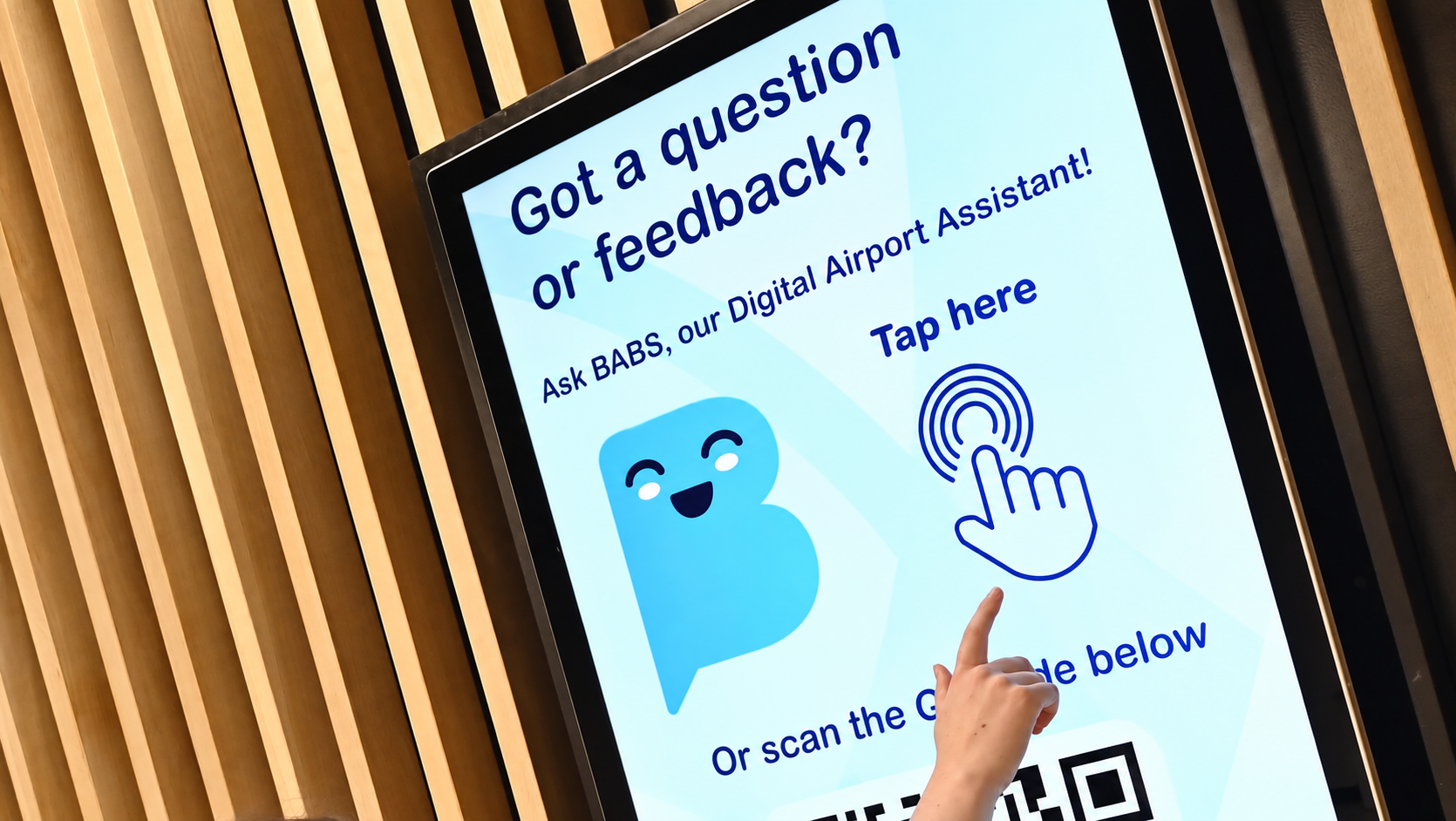
Passengers can access information using physical signage via QR codes and through digital channels without needing to download an app. Because the service is location-aware, it can provide information relevant to where the passenger is and what they are trying to do.
For example, that might mean helping someone find their departure gate, explaining how to reach a car park or providing information about accessible facilities.
The objective is not to replace airport employees. It is to make their time available for the interactions that benefit most from human support.
A Digital Team Member plays a much wider role improving passenger flow and engagement across the airport. By combining location awareness, real-time flight and operational information with conversational AI, they help passengers make better decisions throughout their journey, from finding the quickest route to a gate or checking current security information to understanding a flight delay. With instant access to information and the ability for passengers to self-serve rather than queue at information desks or contact customer service, airports can reduce unnecessary congestion, waiting times and pressure on frontline teams.
At the same time, a Digital Team Member can act as a digital concierge, helping passengers discover relevant facilities, services and retail opportunities based on where they are and what they need. This creates a more connected passenger experience while giving airports a technology platform that can support both operational efficiency and passenger engagement.
Reducing pressure on airport customer service teams
AI can be particularly valuable because passenger demand isn't evenly distributed. During peak periods, disruption or widespread flight delays, customer service enquiries can increase rapidly. Whilst human teams cannot simply increase their capacity at the same speed, digital assistants can.
During severe weather disruption at Birmingham Airport, passenger enquiries increased by 500%. Over three days, Hello Airport handled more than 6,700 questions digitally, equivalent to approximately 782 staff hours or 97 working days of manual handling.
This is one of the most important advantages of airport customer service automation: elastic capacity.
AI Digital Team Members can absorb additional demand without creating longer queues at information desks, overwhelming call centres or requiring an immediate increase in staffing.
Turning passenger questions into insight
Reducing enquiries is only part of the opportunity. Every interaction with an AI Digital Assistant also provides structured insight into what passengers are experiencing.
Airports can identify recurring questions, confusion points, emerging issues and passenger sentiment. Instead of relying solely on periodic surveys or call-centre reports, airport teams can gain a continuous view of what passengers are asking about. This can help identify problems that may have previously remained hidden.
If hundreds of passengers begin to ask where a particular facility is located, for example, the issue may not simply be a ‘lack of information’. It could indicate an airport wayfinding problem.
AI should augment airport teams, not replace them
The strongest case for AI in airport customer service is therefore not simply reducing the number of calls or enquiries. It is about creating additional capacity.
Passengers get faster answers, customer service teams receive fewer repetitive questions and airport operators gain a richer understanding of passenger needs. Hello Airport provides this support 24/7, creating an additional customer service channel that scales with passenger demand.
The result is a more responsive airport experience: more access for passengers, less repetitive work for staff and more time for meaningful human support.


-p-800.png)