

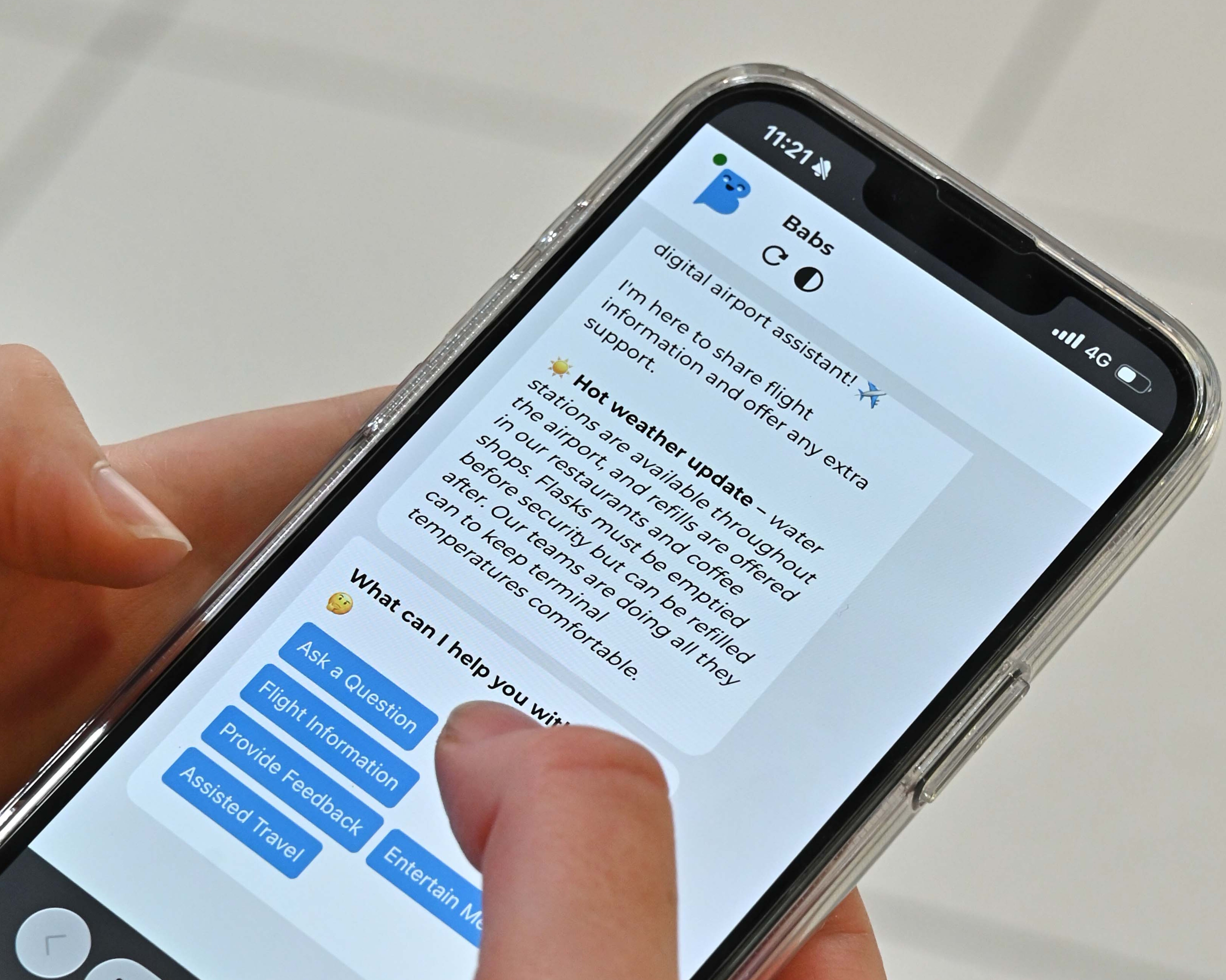

What if every passenger question didn't have to become another task for an airport employee?
Airports deal with thousands of passenger enquiries, requests and reports every day.
· Where is my gate?
· Where can I find assistance?
· The toilet needs attention.
· There's a spill near security.
· The lift isn't working.
· I've lost something.
· The information on the screen is wrong.
Each individual request may seem small. But collectively, they create a significant operational workload. That's why the next major opportunity for airport AI technology isn't simply to answer more passenger questions. It's to connect passenger conversations with the operational systems and teams that need to act on them.
Airport AI should do far more than answer questions. The traditional airport chatbot has a relatively simple job to do: Passenger asks → chatbot answers. That's useful, but at the same time extremely limited and often frustrating for the passenger.
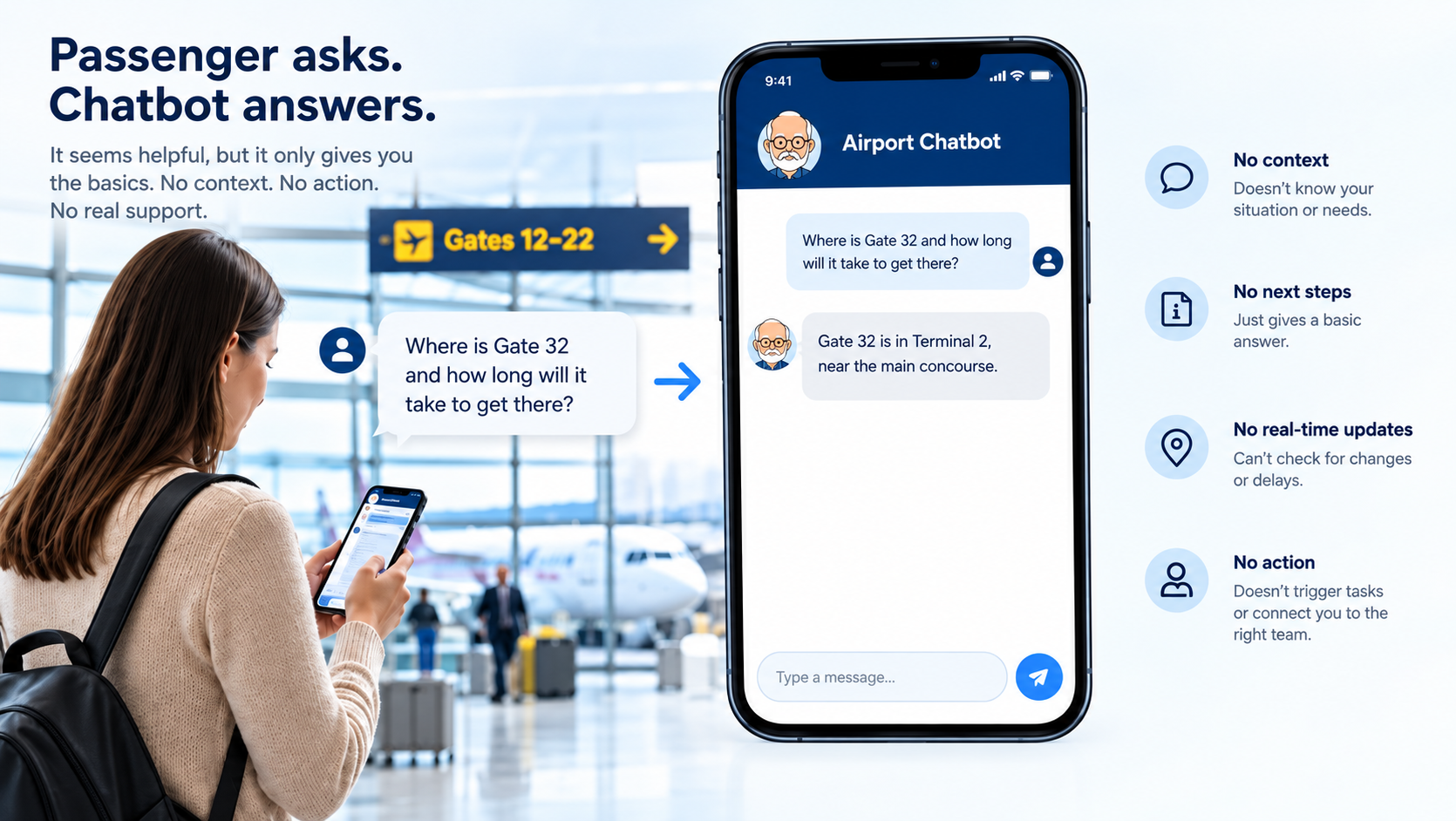
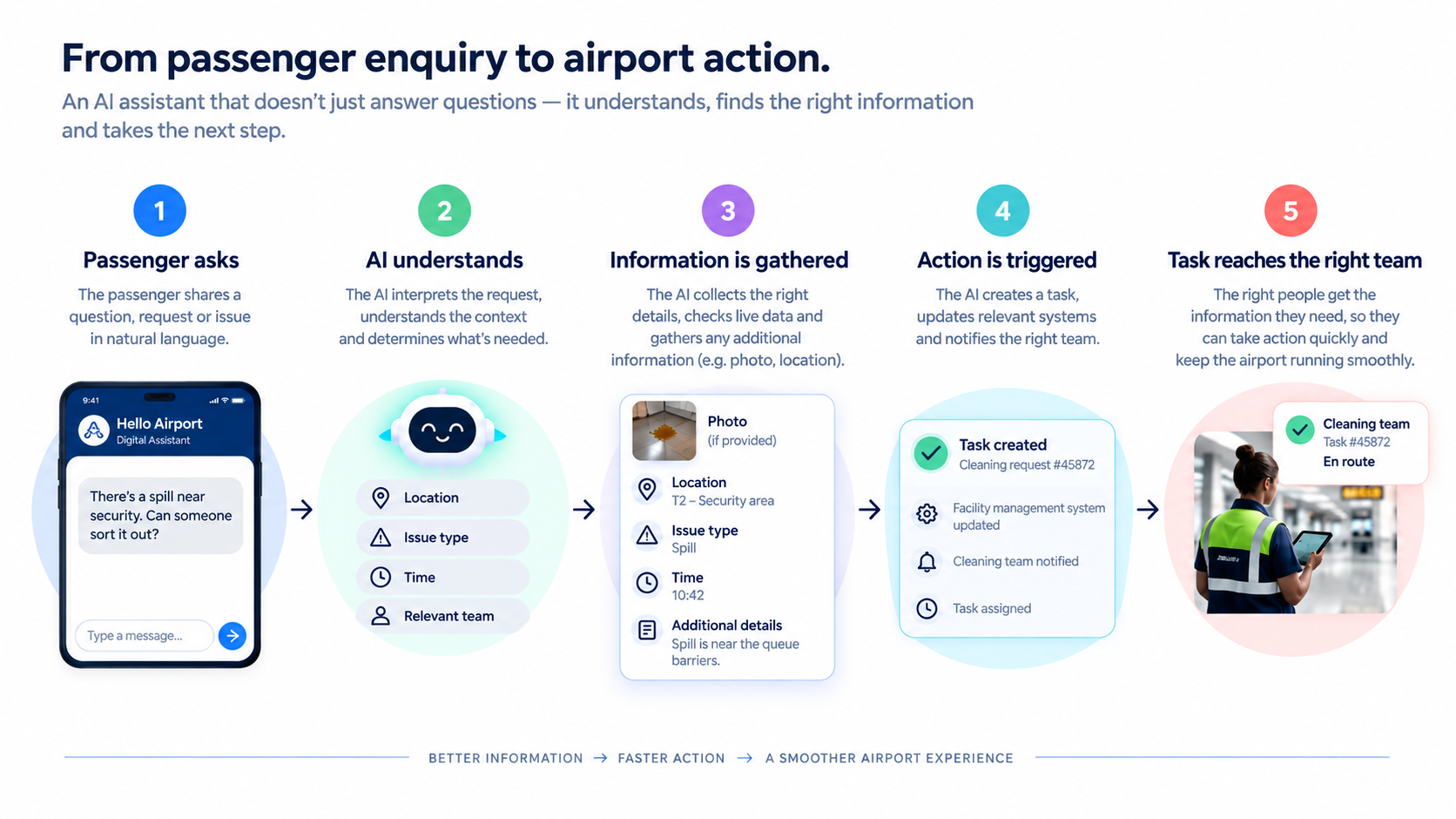
A modern airport AI assistant should create a much more valuable workflow. Passenger asks → AI understands → information is gathered → action is triggered → task reaches the right team.
The difference is important. Instead of simply telling a passenger that a facility is located in Terminal 2, the system could help them find it. Instead of telling someone how to report a problem, it could collect the relevant information and create a report. Instead of simply explaining that a passenger should contact customer service, it could help route the request to the appropriate team. The conversation becomes an operational interface.
Turning passenger conversations into tasks
Imagine a passenger reports a spill in an airport terminal. A traditional chatbot might respond "Please report this to a member of staff" and give a telephone number to call. A Hello Airport Digital Team Member can collect important details:
- The location
- The type of issue
- Additional information
- A photograph where appropriate
- The time of the report
It can then pass that information into the relevant operational workflow. The passenger gets a simple way to report the issue while the airport gets valuable structured information. The cleaning or facilities team automatically gets assigned a task while the customer service team doesn't have to manually process the request at all.
The use of AI across all airport operations
The opportunity isn't limited to cleaning. Depending on the airport's systems and processes, an AI airport assistant could support workflows relating to:
- Cleaning requests
- Maintenance issues
- Damaged equipment
- Broken lifts or escalators
- Signage problems
- Accessibility issues
- Lost property
- Passenger assistance
- Facilities
- Survey submissions
The important point is that the AI doesn't need to replace the operational team. When implemented well, it supports them and can help the teams receive better information and spend less time handling repetitive administration.
.jpg)
The goal isn't fewer people. It's less repetitive work.
An AI agent isn't simply a digital version of an FAQ page. It can be designed to understand a request, access relevant information, follow defined processes and initiate actions creating a useful interface between passengers and airport operations.
The passenger gets a simple conversational experience. The airport gets structured information and potentially automated workflows. And operational teams can spend less time answering repetitive questions, manually logging reports or directing passengers to the right department.
Instead of replacing people, AI can give airport employees more time to do the work that only people can do: supporting passengers, managing complex situations and keeping the airport running smoothly. That's a different vision of automation. It's about removing some of the repetitive work that gets in the way, while keeping people at the heart of the passenger experience.
That's why Digital Team Members are designed to support passengers while also helping the wider airport team. For airports looking to improve passenger flow, reduce repetitive enquiries and increase operational efficiency, the question isn't simply:
"Can AI answer our passengers' questions?"
It should be:
"What could our airport team achieve if AI could answer the question, understand the context and take the next step?"
That's where a Digital Team Member becomes more than customer service AI technology, they become an essential extension of the airport team.


-p-800.png)