


If your airport chatbot can answer a passenger's question but can't actually help them do anything, is it really improving the passenger experience?
That's the uncomfortable question airports should be asking as AI becomes an increasingly important part of customer service. Because having an airport chatbot that can tell a passenger where the toilets are, what time a shop closes or what the airport's parking options are isn't particularly revolutionary anymore.
The real opportunity is to build something that can understand what the passenger is trying to achieve and then help them take the next step.
An airport chatbot isn't the same as a Digital Team Member
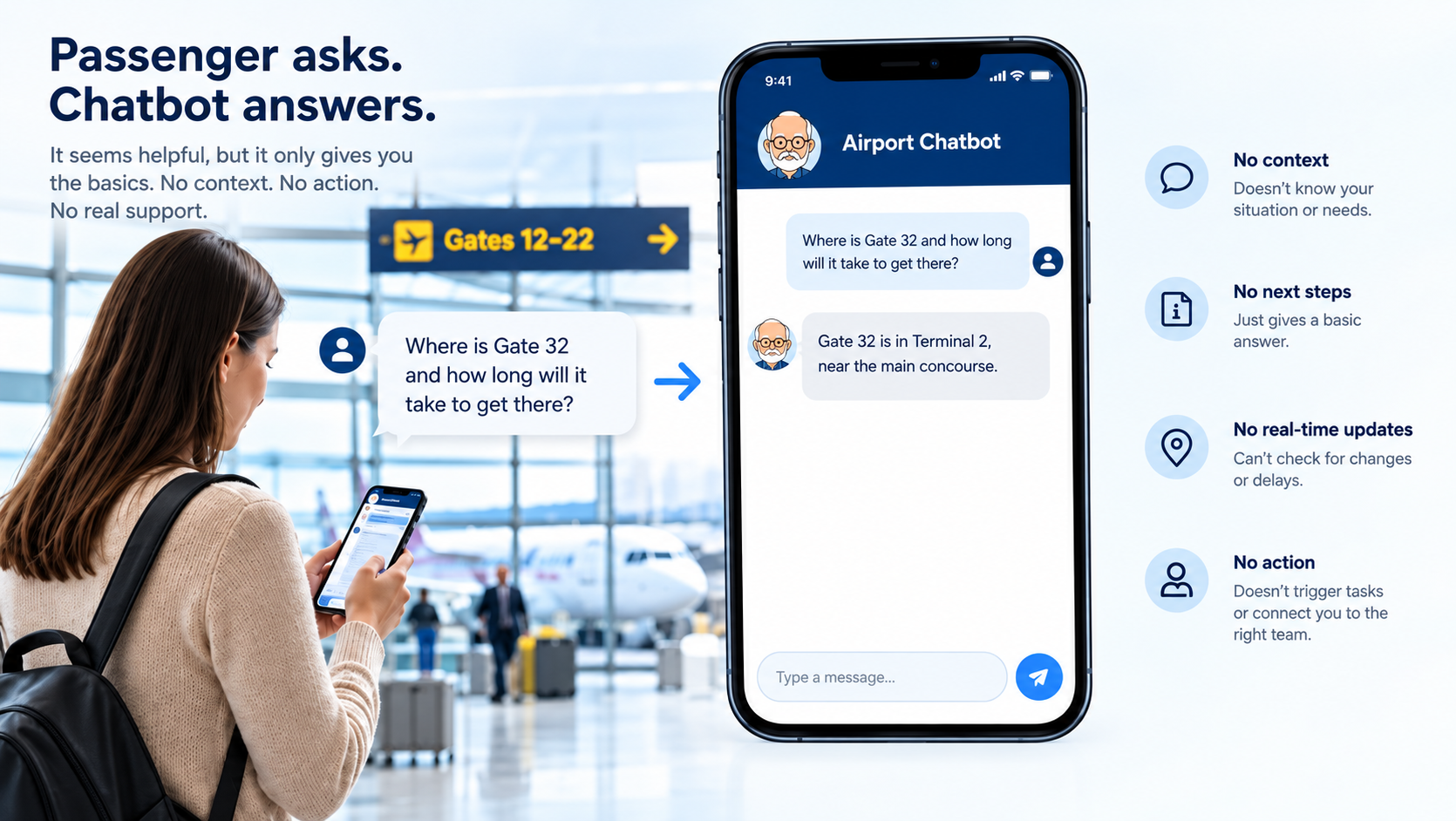
Traditional airport chatbots are good at one thing: answering questions. A passenger asks "Where is Gate 32?" The chatbot provides an answer.
But what if the passenger doesn't really need an answer? Perhaps they need to know how long it will take to walk there. Maybe they have reduced mobility. Perhaps security is currently busy. Maybe they're travelling with children. Maybe their flight has changed gates.
The useful response isn't simply a piece of information. It's contextual assistance. A modern airport AI assistant like Hello Airport's Digital Team Members understand the wider context and help the passenger make a decision. That's the difference between answering a question and providing assistance. This is something your customer service team will already be doing instinctively.
Passengers don't want information. They want to get somewhere.
Consider airport wayfinding. A conventional airport map can show a passenger where they are and where they need to go. The passenger still needs to figure things out for themselves which isn’t easy when they are running late, are stressed or don’t speak the local language.
An airport digital assistant can do much more. It can understand where the passenger is, where they're trying to get to and what information might affect their journey. Instead of simply providing a map, an AI airport navigation assistant could help answer:
- What's the quickest way to my gate?
- How long will it take?
- Where is the nearest lift?
- Where can I find accessible toilets?
- Where can I get food on the way?
- Has my gate changed?
- Is there anything I need to do before boarding?
That starts to look less like a confusing map and more like a Digital Team Member.
The same applies to passenger flow
Airports are constantly trying to improve passenger flow, reduce congestion and minimise unnecessary queues. Yet much of the technology designed to manage passenger flow focuses on what is happening to passengers rather than helping passengers make better decisions themselves.
An AI passenger assistant can become another layer in the airport's passenger flow strategy. If passengers can instantly find the right location, understand what they need to do, choose an appropriate route and get answers without joining another queue, the airport can remove some of the friction from the journey. That matters because every unnecessary question, queue and wrong turn adds pressure somewhere else in the terminal.
What happens when something goes wrong?
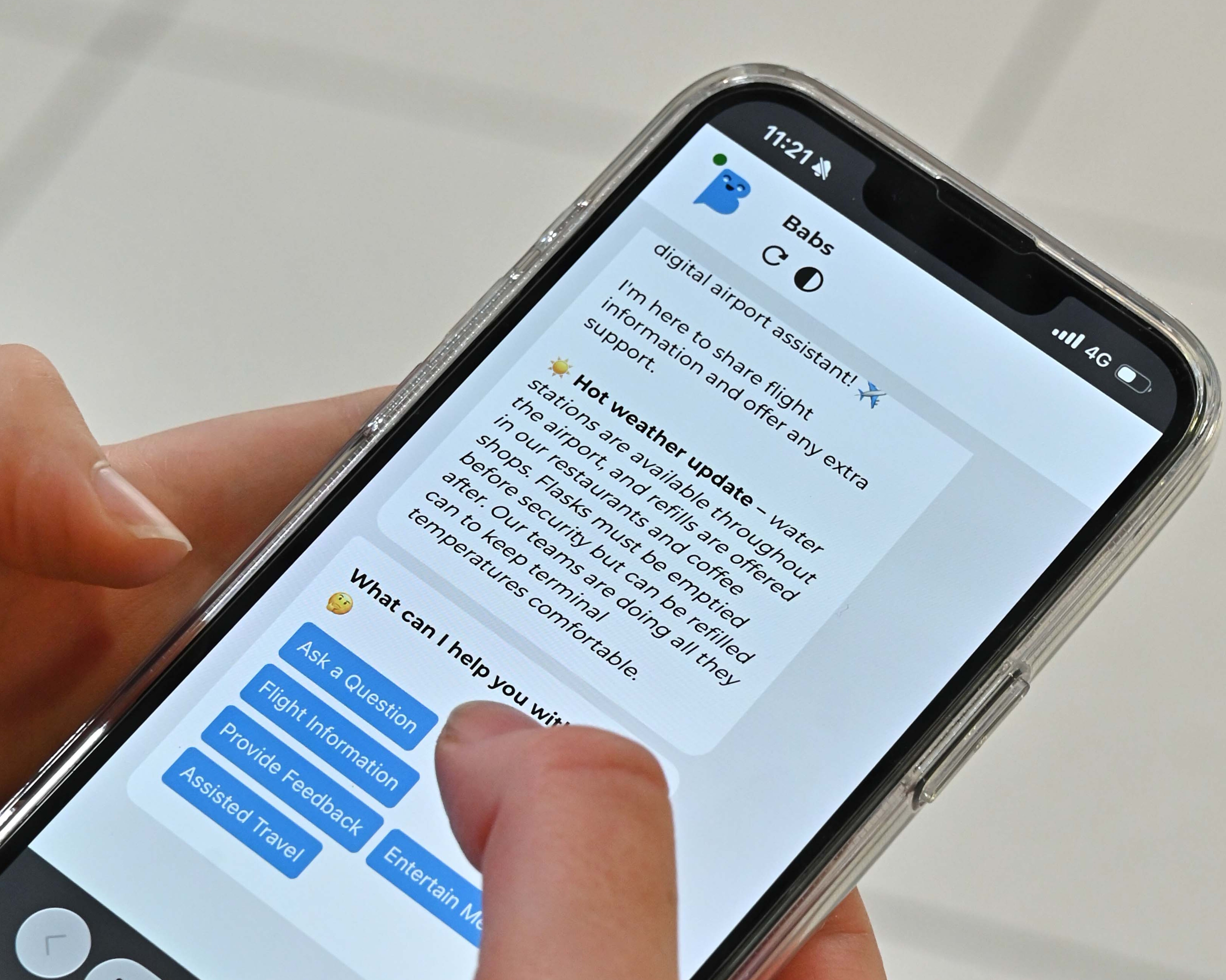
This is where the difference becomes even more obvious. A passenger asks, "My flight has been delayed. What do I do?". A basic airport chatbot might provide a generic disruption message. A more capable airport AI assistant could provide relevant information about the flight, explain what the passenger should do next and direct them towards the appropriate service or location.
During disruption, that distinction becomes critical. When thousands of passengers suddenly have varying questions, a generic message is not enough. Airports don’t simply need a system that can answer more questions. They need a system that can help more people without increasing staff workloads.
From answering questions to taking action
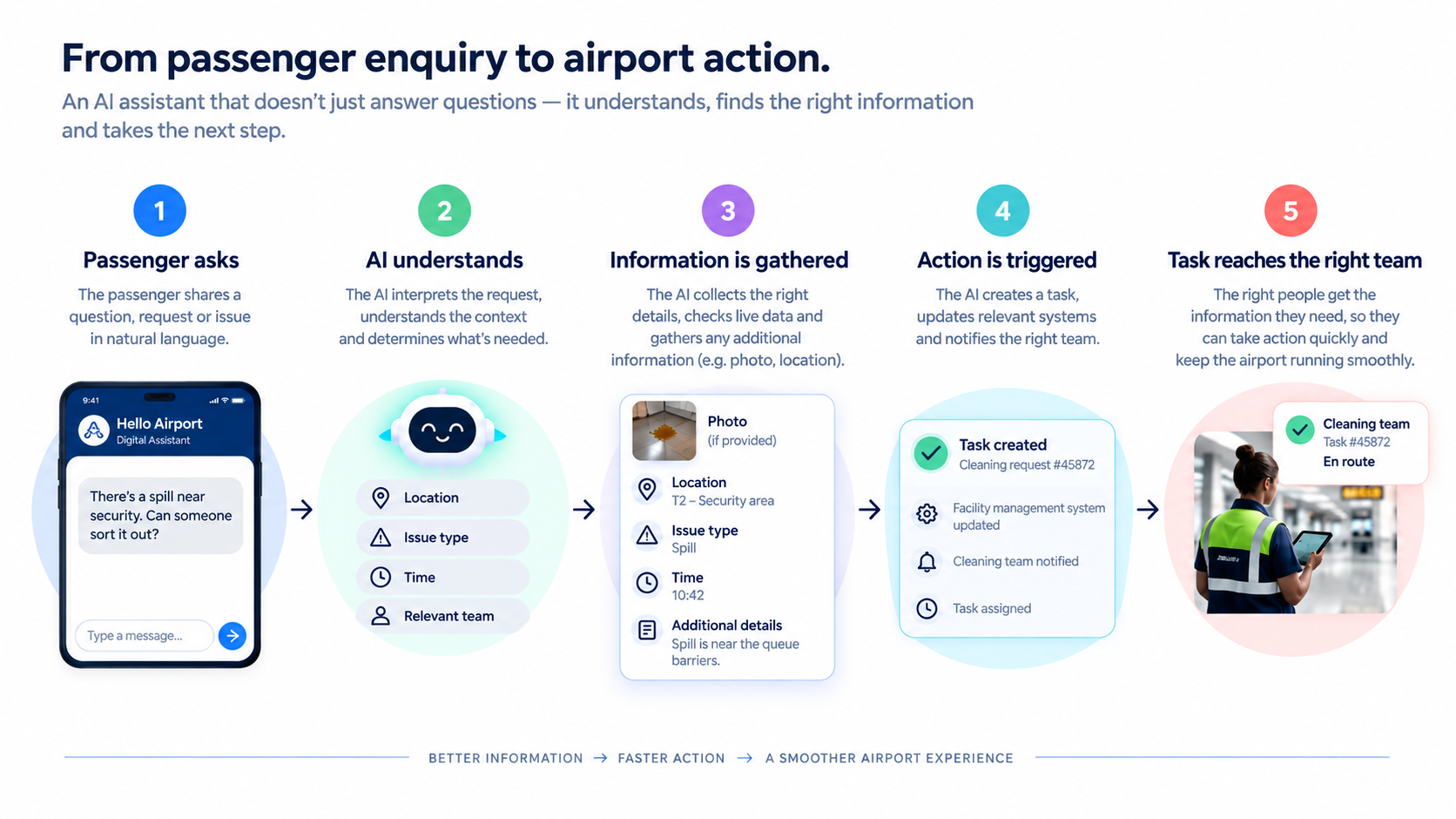
The next generation of airport AI agents will go beyond conversation. Hello Airport connects with airport systems, operational processes and services. That means helping a passenger report an issue, triggering a task for an operational team, providing information from live airport systems or directing a request to the right member of staff. The conversation becomes the beginning of a process rather than the end of one. That's a fundamentally different proposition from a chatbot.
So, what should an airport actually be buying?
The answer should be obvious by now. Not another chatbot. Not another FAQ system. Not another digital version of the information already sitting on the airport website. The question airports should be asking themselves is:
Can this technology actually help our passengers and help our teams?
An effective airport AI strategy is able to understand context, connect information, support passenger navigation, improve passenger flow and take action where appropriate. It should work alongside airport teams rather than simply sitting on a webpage waiting for questions.
The airport chatbot has had its day
The next step is an AI Digital Assistant that behaves more like a member of the airport team. That's the idea behind Hello Airport, a Digital Team Member designed to help passengers navigate, understand, find, prepare and respond, while giving airport teams more time to focus on the things that genuinely need a human. Because knowing the answer isn't the same as knowing how to help.


-p-800.png)