



Airports are difficult places to navigate. Large terminals, multiple levels, security zones, gates, car parks, transport links, shops and facilities can make finding the right location challenging even for frequent travellers.
For passengers who are unfamiliar with the airport, have accessibility needs or are under time pressure, wayfinding can become one of the most stressful parts of the journey. AI is creating new ways for airports to provide personalised navigation support.
From airport maps to conversational navigation
Most airports already have maps. But the biggest challenge is getting passengers to use them effectively. Passengers don’t necessarily think in terms of map coordinates or terminal zones. They think in questions.
- "How do I get to gate 25?"
- "Where is the nearest toilet?"
- "How do I get from the car park to departures?"
- "Where can I find the lounge?"
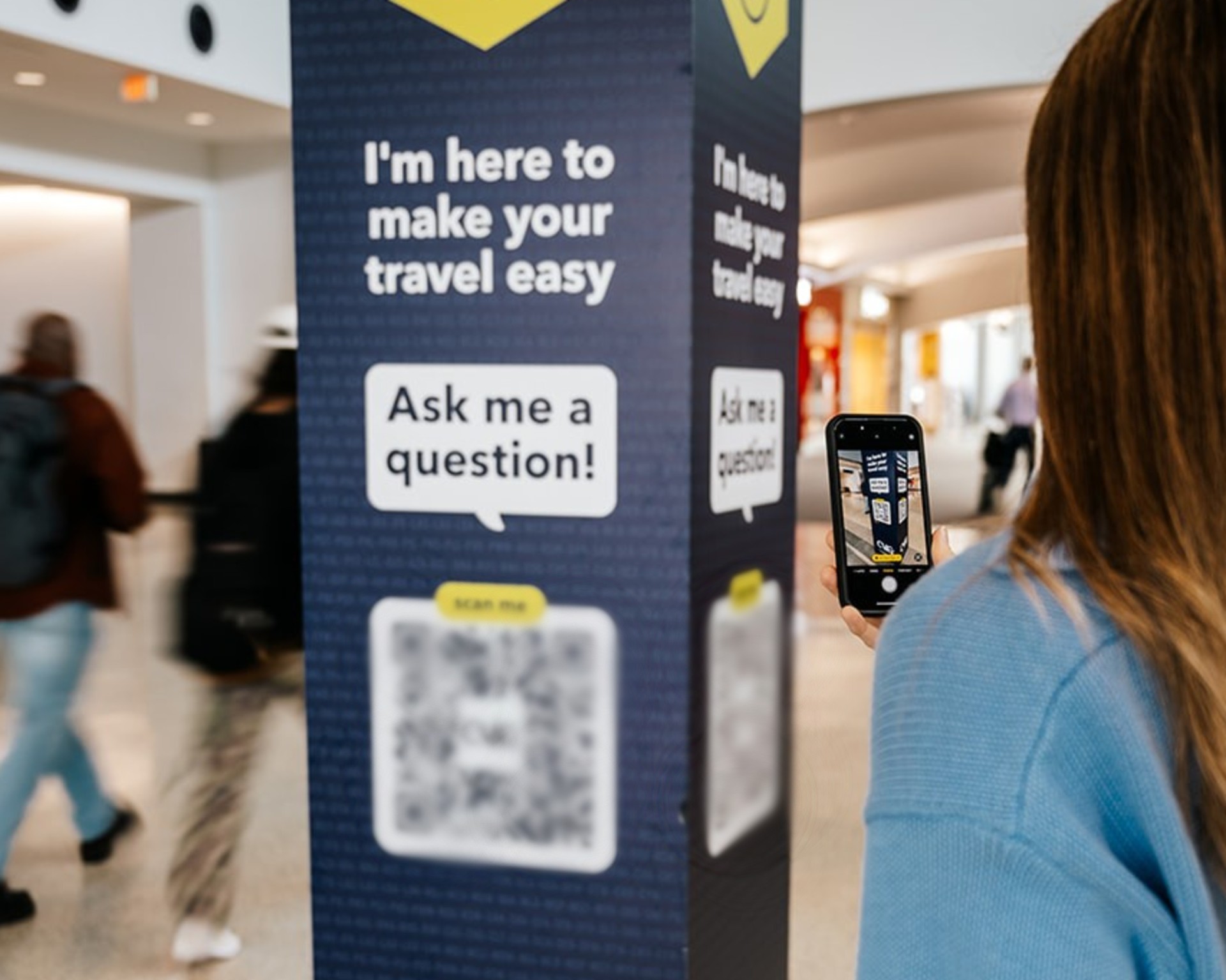
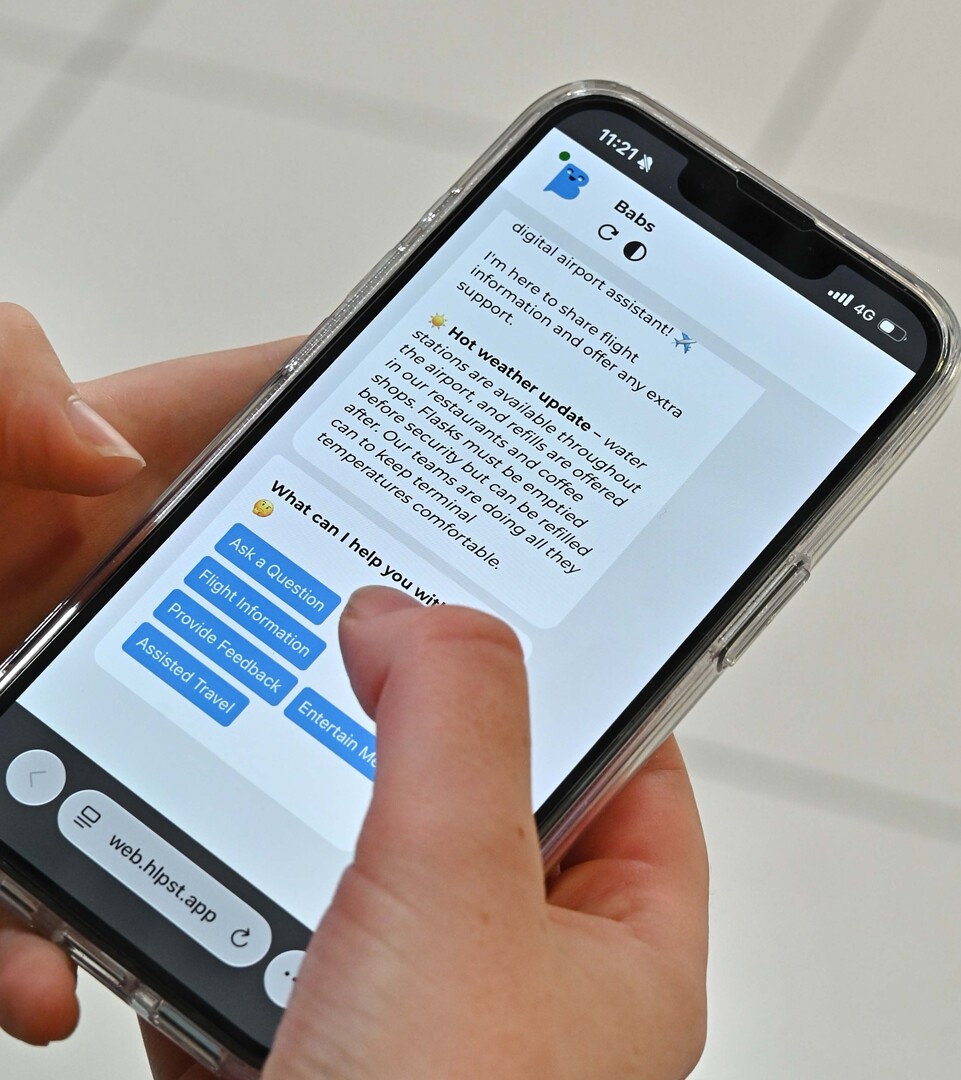
An AI airport navigation assistant enables passengers to ask those questions naturally and provides answers. Digital Team Members like Hello Airport expand on this by using context and location awareness to tailor the answers to individual passengers as they navigate the airport from car park to departure gate.
.jpg)
Location-aware airport wayfinding
Hello Airport is designed to provide location-specific guidance, including terminal maps, navigation, directions and routes, gate information and facilities. This means an airport can move beyond simply publishing a map and towards providing contextual navigation support.
The difference is important. A static map tells passengers what exists. An AI wayfinding assistant can help explain how to get there.
Supporting the entire passenger journey
Wayfinding starts before passengers enter the terminal. They may need directions to a car park, transport interchange, terminal or drop-off area. Inside the airport, they may need to navigate check-in, security and their departure gate. After security, they may want to find a restaurant, shop, lounge or other facility. Hello Airport supports all these different stages through a single conversational interface by understanding exactly where a passenger is on their journey.
At Cincinnati/Northern Kentucky International Airport, Hello Airport has supported navigation through the airport, buses and parking lots as part of a wider passenger information service.
Wayfinding and accessibility
Good airport wayfinding is particularly important for passengers who find unfamiliar environments difficult. A passenger with reduced mobility may need to identify accessible routes. A neurodiverse passenger may benefit from knowing what to expect before moving through an unfamiliar area. For a passenger with anxiety, they may simply need reassurance that they’re heading in the right direction. Conversational navigation provides another way to access that support.
AI can reduce pressure on airport teams
"Where is...?" is one of the most common types of airport customer service questions. Every time an employee has to stop what they are doing to provide basic directions, the airport is using human capacity for a task that can often be automated.
An AI navigation assistant can handle these repetitive enquiries while staff remain available for more complex passenger needs. This is particularly valuable at busy airports where small wayfinding questions can accumulate into significant customer service demand and cost.
Connecting wayfinding with live airport information
The real opportunity comes when wayfinding is connected to other airport data. Hello Airport integrates with live flight data, security wait times, parking availability, shuttle tracking, baggage information and other operational systems and can make smart recommendations based on the passengers flight time and how long they have to navigate the airport.
This creates the possibility of moving from static directions to more contextual guidance. For example, the most useful route to a gate may depend on where the passenger is, the location of security queues and the status of their flight. Whether they can stop for a coffee demands on how long it will take them to get to the gate given all these other factors.
A more human approach to airport navigation
AI airport wayfinding isn't about making maps obsolete. It is about making airport information easier to understand and use. By allowing passengers to ask questions naturally and receive location-specific answers, airports can make navigation more intuitive while reducing repetitive demands on customer service teams.
Hello Airport combines airport wayfinding, passenger information and conversational AI to create a digital layer of support that is available whenever and wherever passengers need it.


-p-800.png)